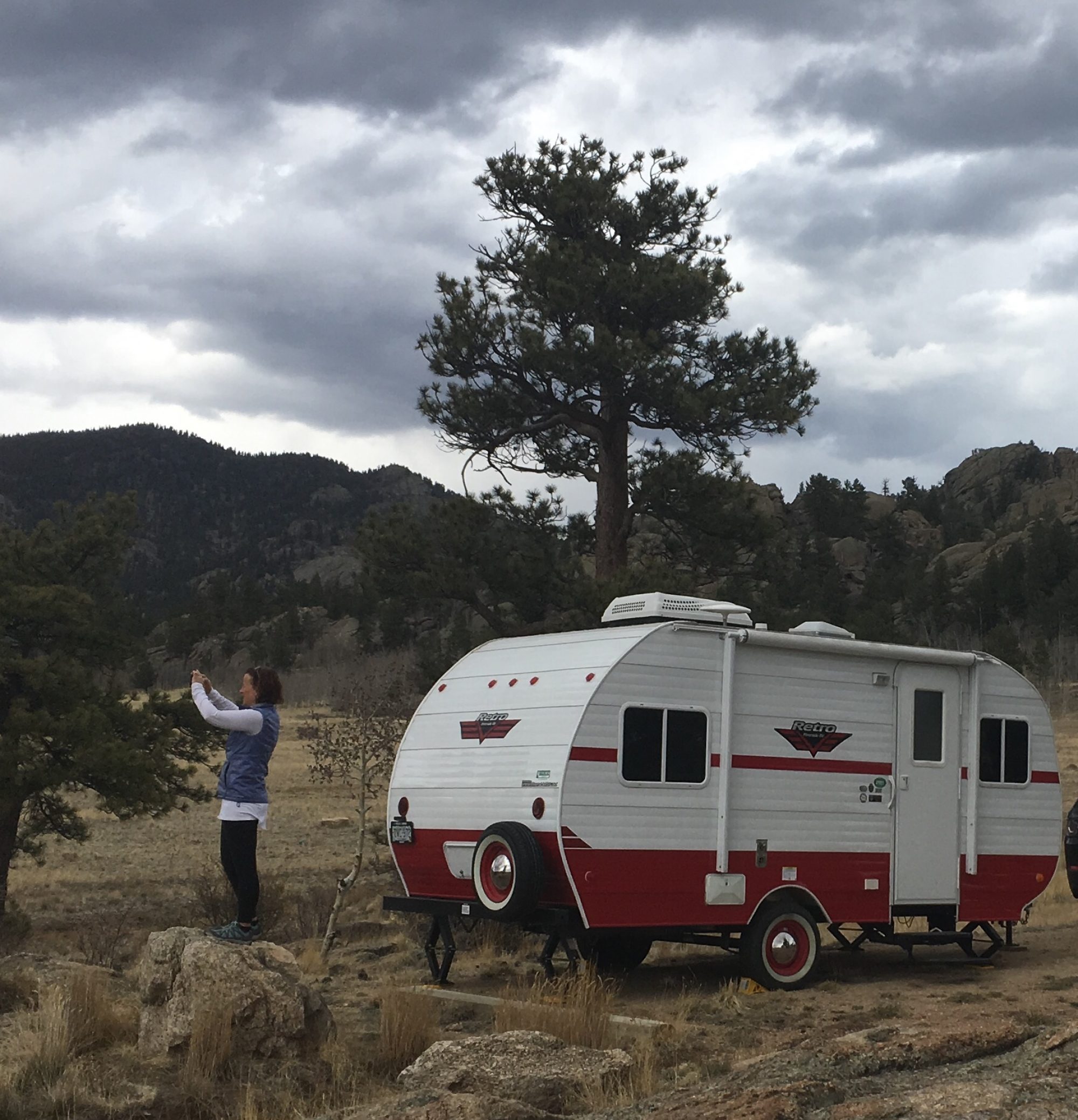
After packing the camper and tidying up the house we began our journey in Elvis. We said goodbye to Denver and embarked on the road south and east. We traveled in the dark, across the plains, and spent the night outside of Lamar, Colorado. We were the only ones at the snow-covered grounds of the campground, but woke to 24 degrees, the sound of big-engine trucks starting up, and our first beautiful sunrise through the trees.
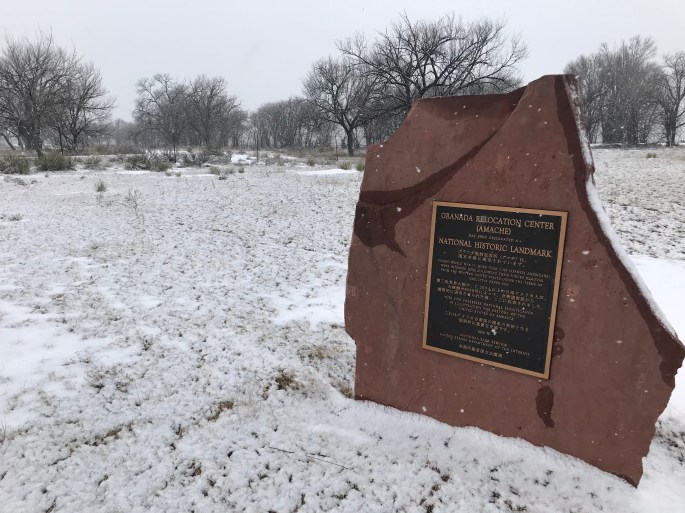
We packed up and headed toward Oklahoma amidst a light snow and winter winds. Arriving at the site of the Amache Japanese Internment Camp gave us a considerably-removed sense of the innocent victims braving the bitter cold and blistering winds on these open grounds. The grounds were desolate but for a few watch towers and some barbed wire fencing. The informational sign posts depicted the true testament of courage, strength, and the strong will of the people. They lived as optimistically as they could amid dire circumstances. The heat was brutal in the summer, and winters looked to be abysmal. Photos depicted gardens lush with flowers and necessary crops, and children sitting on stiff wooden benches in make-shift schools. With more than 7,300 residents, this was the tenth largest camp in Colorado. The inhabitants waited in long lines for the latrines and mess halls, and at night slept on canvas cots within a 20’ x 24’ portion of a barracks building, poorly insulated and heated by coal burning stoves. None of the inhabitants were ever convicted of espionage, their fate determined by a paranoid people and a fear-based idea.
~ ~ ~ ~ ~ ~ ~ ~ ~ ~ ~
Thursday night we arrived at Palo Duro Canyon, the second largest canyon in the country. We were giddy with excitement at our first new-found home. We set up Elvis amongst cedar and mesquite with the red and green hues of the canyon’s walls wrapping its stone arms around us. We watched the canyon walls, alit with yellow from the setting sun, as we clinked our glasses of Scotch (thanks Josh!) and reflected on our good fortune.
It’s hard to believe it is January and we are camping. The benefit to this time of year is that we don’t have to plan ahead – vacancy abounds! We are just one of four in the Sagebrush campsite and the silence is deafening. Plus, there are hardly any people on the trails.
Each day we have hiked within the canyon, the first along the Rock Garden trail and up to and along the rim offering us a bird’s eye view of this portion of the canyon. The canyon stretches 120 miles and is called Palo Duro, translated in Spanish “hard wood”, named after the plentiful cedar bush the Native Americans used to construct their bows and arrows. In the park, the canyon area is several miles wide and 800 feet in depth. The hike to the symbolic hoodoo, the Lighthouse, took us deeper into the canyon along a red-sandy trail. I think it appropriately named as it looks over the canyon protecting its splendor. After, we walked along the Red River at the base of the canyon. I could picture my friend Roxy, in the heat of the summer, sitting in the red-clay of the river with her family, treating themselves to their very own spa treatment by plastering their skin with the silt. We were hiking in near 50 degrees but the sun was so warm and the skies so blue. We took in the stacked layers of the canyon walls, depicting the occurrences of deposits, erosion, and chemical reactions, that have left the colored stripes of the walls over the last million to 250 million years. We observed the prints and scat of local animals – and the occasional tufted missing tail, listened for birds, and got lost in our own thoughts.
At the visitor center we watched a documentary about the history of the canyon and its people. As history points out, settlers and Native Americans were at odds with each other fighting over who owned this great land. In the film, the fascinating story of Cynthia Parker was told – a young girl abducted by one of the tribes and later wedded to the chief, together raising three children. She could fend for herself and learned to live off the land. When later captured, by the Army, with her young daughter and reunited with her family, she longed to be back with her tribe. Her daughter died at a young age, and soon after Cynthia did too, many think of a broken heart.
One of the tit-for-tats the Army and the Native Americans got into was stealing each others’ horses. After several back and forths of this game, the Army got weary of the horse play and rounded up 1,400 horses only to corral them to the bottom of the canyon where they were shot and left to rot. It is said that one can still hear the neighing and whining bounding off the walls in the depths of the canyon.


 Arna’s Ramblings
Arna, email me with an email address for you so I can give you my sister’s number for when you are in Arizona. She lives close to the border and loves visitors. – Dolores
LikeLike
Arna.dimambro.lewis@gmail.com
LikeLike
Great start to your trip. I can’t believe I’ve never even heard of the second largest canyon in the country until now. Hope you can keep the weather on your side over the next couple of months.
LikeLike
I only wish I had a picture of us all, red with the mud, to add to your story,
LikeLike
Me too Roxy! You must go back!
LikeLike