Silver City

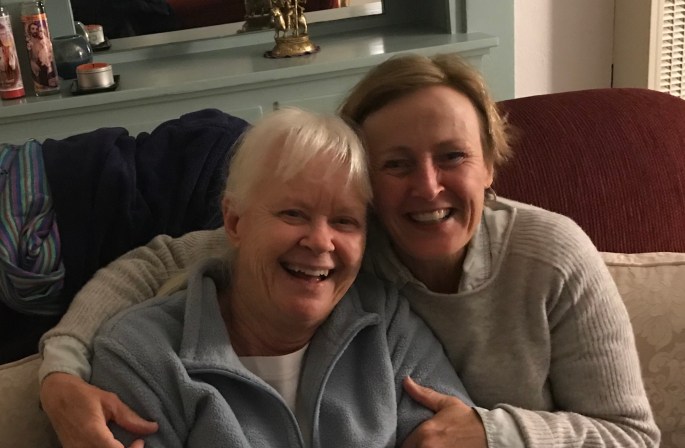
A highlight of this trip has been connecting with my cousin Cate in Silver City, NM. Cate’s mother was my mother’s older sister Dorothy Martin Bradley, and Cate was one of eight kids who grew up in DC and later Quincy. Though the Bradley’s came up to Durham for Thanksgiving every year, and we saw them here and there on other occasions, Cate left New England for the west at a young age so meetings have been rare. Currently, in the Martin family of nineteen cousins, Cate and I are the only ones living in the west mountains, everyone else is on either the west or east coast.

It was truly serendipitous that we met up. I had been emailing family about my dad’s paintings and the morning that Mike and I were leaving El Paso for Arizona I received an email from Cate stating that anyone was welcome, anytime, to her home in Silver City. Her home is in the Gila Mountains which Ian said we should try to get to, and as you know – we had no definitive plans. I immediately called her and said what about tonight? Not only was she willing, she offered her house which she was leaving for consulting work in Colorado the next day. She was teaching a yoga class for Veterans until six so we met in town for dinner. There is nothing like family.

Not only does Kate look like my Nana, she has the same alluring cloudless blue eyes. As we spoke, I felt Nana’s presence – the two sharing kindness and compassion (yes cousins, I know our Nana could be tough at times) along with a sharp and keen mind. Cate is a few years older than me and there was no searching for words or lapsed memory of any kind! She has studied landscape architecture, conservation, yoga, and more. We caught up with each other, swapped stories, and drank a bit too much mezcal. Now the bond is sealed, we share too many similarities and interests, so we will stay in touch for sure. She already roped Mike into speaking at a bike conference she advocates for in Silver City so we shall return.

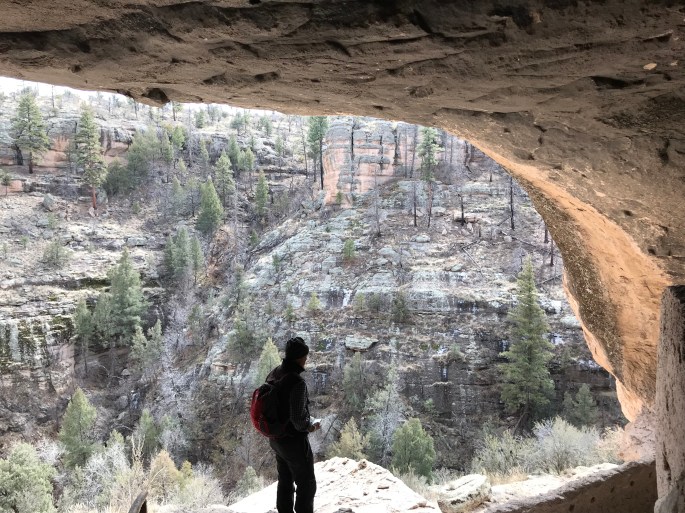
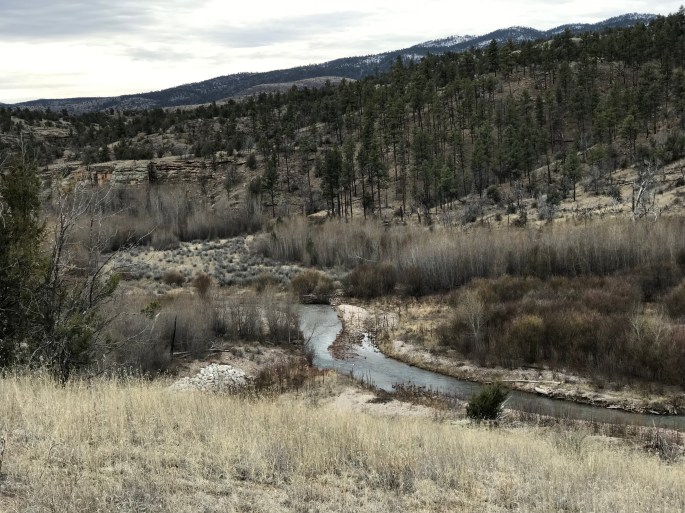
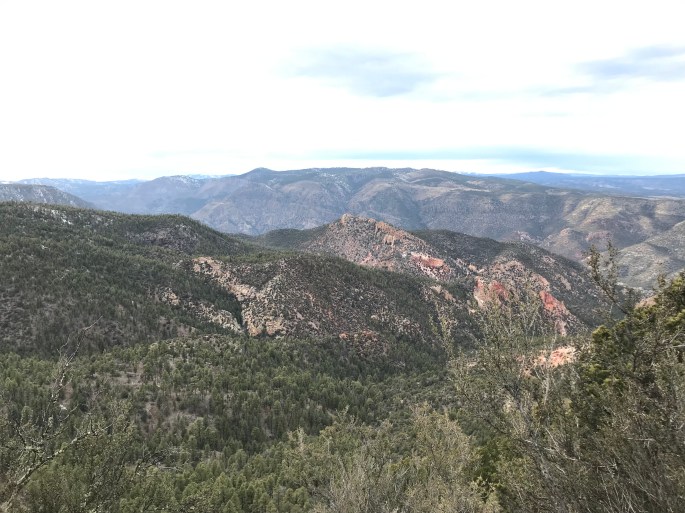
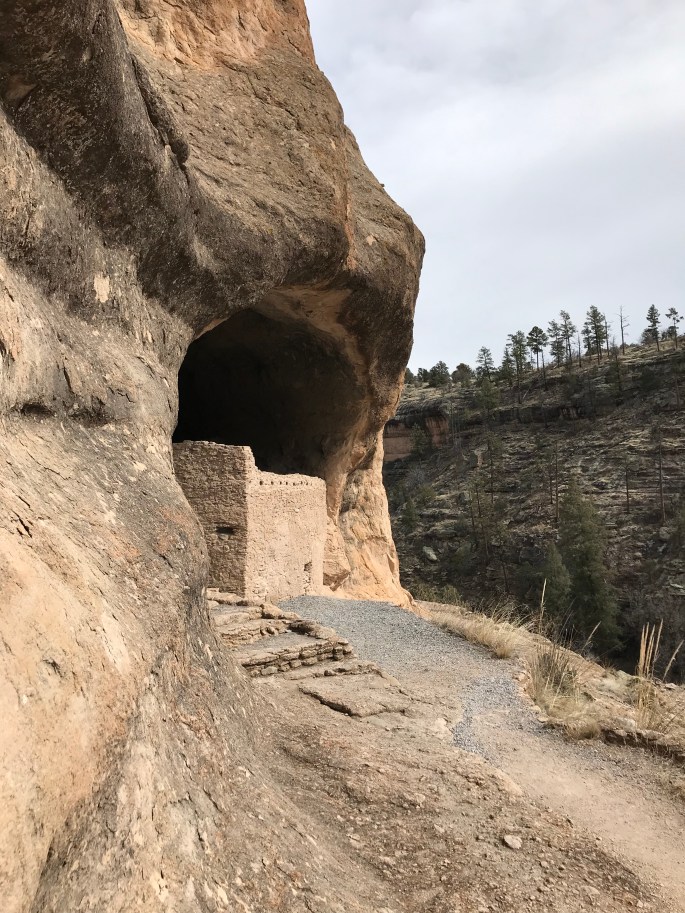
The next day we explored in the Gila National Forest. You have to drive up into the mountains for about 45 minutes on twisting roads overlooking a terrain similar to the Davis Mountains. As you near the top and come around a bend you are greatly surprised by an open expanse below and snow-capped mountains in the distance. We hiked about a mile to the Gila cliff dwellings of five separate rock domes in the mountain. Partial remains of the walls, timbers, and even some pictographs were evident. From the 1280s to the early 1300s the people of the Mongollon culture occupied the caves. They were skilled potters and grew corn, squash, and beans. No one knows why they abandoned their homes and fields. We hiked a bit more in the Gila wilderness near the river and then bathed in a hot spring before heading back to Cate’s house.

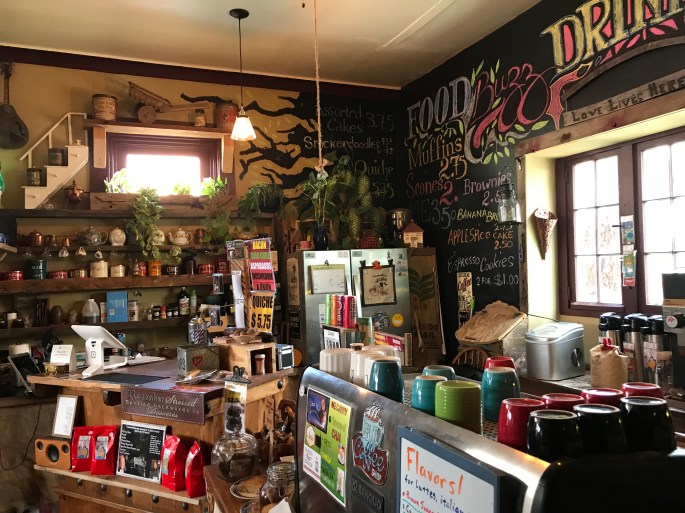
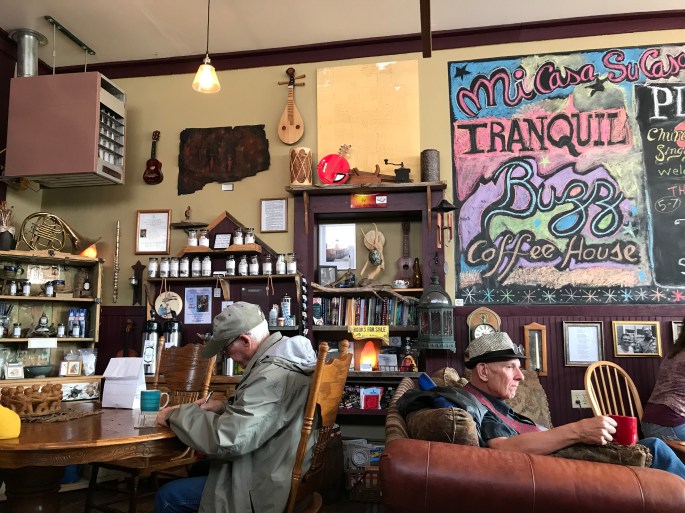
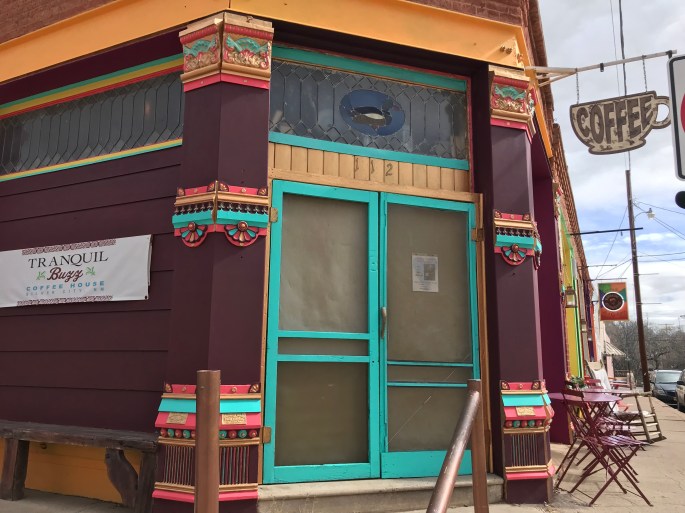
The next morning we found the most quintessential coffee shop – Tranquility Buzz. All the locals seem to get their mojo here as they greeted one another and sat with their morning cup. The coffee house graciously supports local artists. Art is on the walls, writers’ groups meet and the shop sells their books, and local musicians perform on a small raised platform. I believe there are some competitive games of bridge played out on the long wooden table, too. The shelves are loaded with books, the coffee is robust, and I could have stayed all morning but the road was calling.

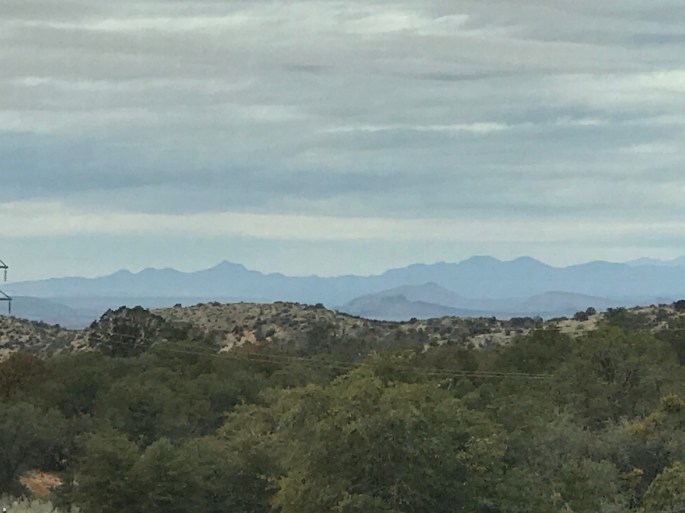
Driving out of Silver City west toward Arizona was one of our most breathtaking rides. As we dropped down the desert stretched out before us until it engaged with the mountains that glowed blue along the horizon. Most impressive was the voluminous sky. Billowing gray swirls of clouds filled the upper part of the sky turning wispy and blue as they touched and overlapped with the mountains making it difficult to discern one from the other. As Cate would say – it’s just part of the New Mexico magic.
El Paso

I am finding that it is best to write as soon as I can following an experience, when it is still raw and my memory and emotions are most vivid in my mind. But, we have been so busy this past week I just haven’t had a chance. Some days, we pass in and out of connection with the world (literally and figuratively) and just tumble into doing what we’re doing. But, now we are in far southern Arizona, quite close to the border, and have set up for a few days so I hope to chill and call forth my memories.

We left Ian on Monday morning and drove north through the Davis Mountains, the most extensive mountain range in Texas. The area is more forested than the desert it rises up from, and its chroma changes from sage to a deeper evergreen. This is where Ian comes to get wood for his wood stove. We stopped at the McDonald Observatory which sits under some of the darkest skies in the country. Next time we visit Ian we need to come back here for some star gazing. And in Marfa – for that slow-cooked barbecue we missed out on at Convenience West because the line was so long.

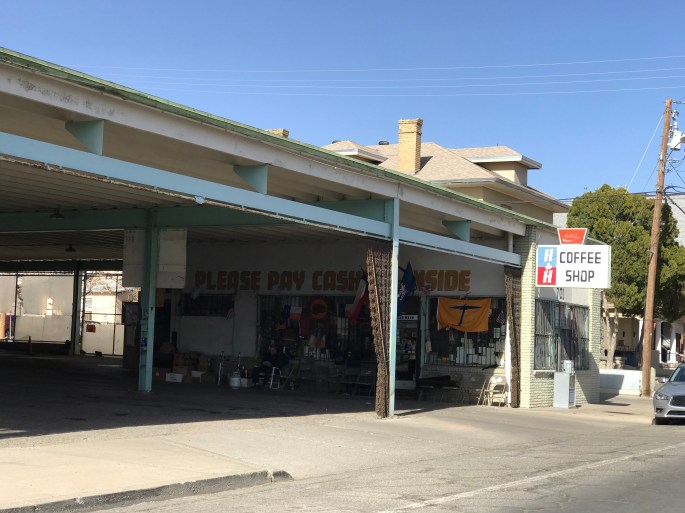
But, we were headed for El Paso and needed to be there in time for the March and to hear Beto speak. It was so lucky for us to be visiting El Paso just when all of this was happening. Our first stop was at the H & H Car Wash where we had the best Mexican food ever! Get your car washed and sit at the counter in the diner for friendly service and scrumptious food. I recommend the enchiladas! The CNN reporter, Kaitlan Collins, was sitting at the counter with us and told us how to avoid the road closures on our way to the Bowie High School. On the way out the door, the owner, sitting outside watching the world go by, thanked us for coming in.

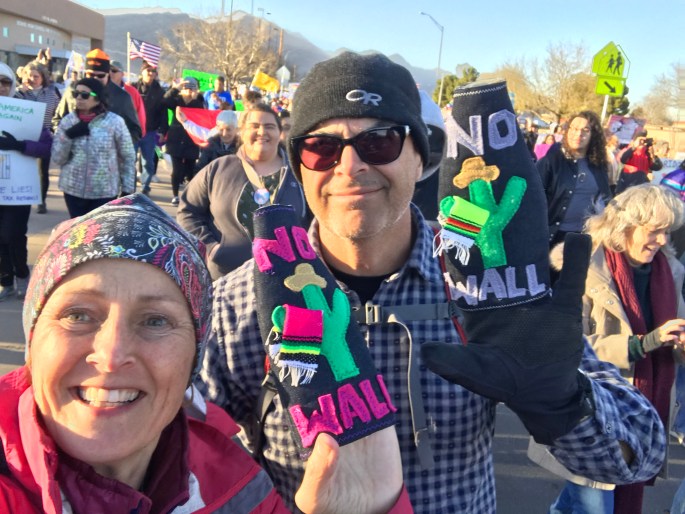
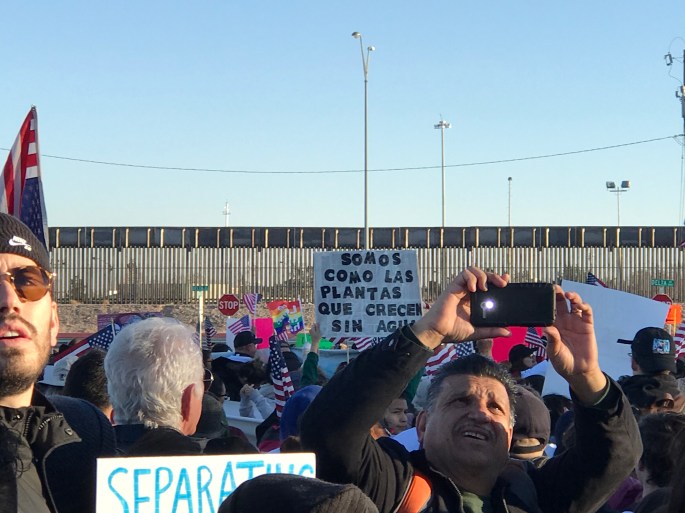
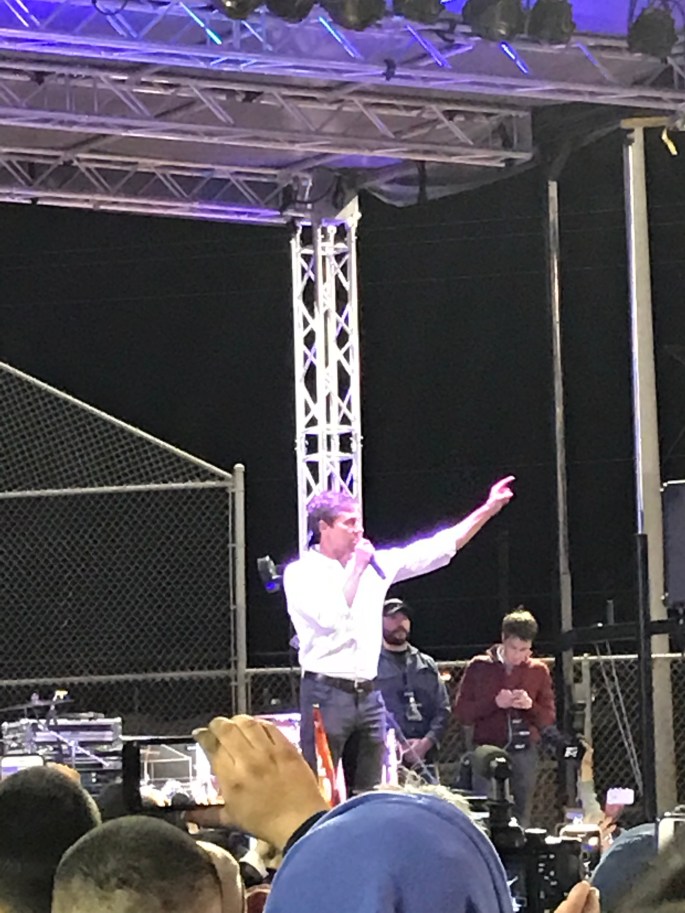
We set Elvis up in Franklin Mountains State Park, high above the city with a view downtown and beyond to Ciudad Juarez, Mexico. We drove into town and arrived at the high school amongst a group of people, mostly local it seemed, hoisting signs and chanting for Beto. We were among a mixed group of Anglos and Latinos, and even people carrying Canadian flags – making Mike so proud. Once Beto gave the crowd a send off we began the mile walk to the baseball field where we were greeted with a Mariachi Band. Eventually, everyone was chanting for their hometown hero again and Beto came out to address the crowd. I don’t know yet if he is the right person to run against Trump, but I do know he has a message this country needs to hear.

As Beto points out, and as far as Mike and I could see, El Paso is a model community proving that two nations can live and work together while sharing their different cultures and histories. As he belted out, fist pointing skyward, El Paso lives by respect for others and is a safe city not because of walls but in spite of walls. And when he spoke in Spanish the crowd cheered even louder. As we left the park, we walked back to our car by way of a different route, and soon heard Trump’s voice. We had come up against a crowd gathered around a jumbotron projecting the Trump rally at the Coliseum. Here we were, many of us just from the park, walking through a crowd of Trump supporters. Wanting to get the hell out of there, but curious about who would be there, we witnessed everyone peacefully moving forward – a true testament to the story of El Paso and its citizens. I couldn’t help but wonder who was paid to be there.

Our night ended with a bit of a fiasco. We drove back up to the Franklin Mountains ready to unlock the gate to the park only to find we couldn’t undo the locks. I knew we had the right combination – my favorite number 49 doubled (my home address number growing up in Durham), but the locks wouldn’t budge. We left the car at the base thinking we would just need to head up the mountain another half a mile with our dinner in our brown bags. Well, turned out to be more like a mile and a half in the dark when we were tired and hungry. The only other camper passed us by, but we figured he just didn’t want to deal with some scruffy looking people with their possessions in paper bags. Ah, life on the road.

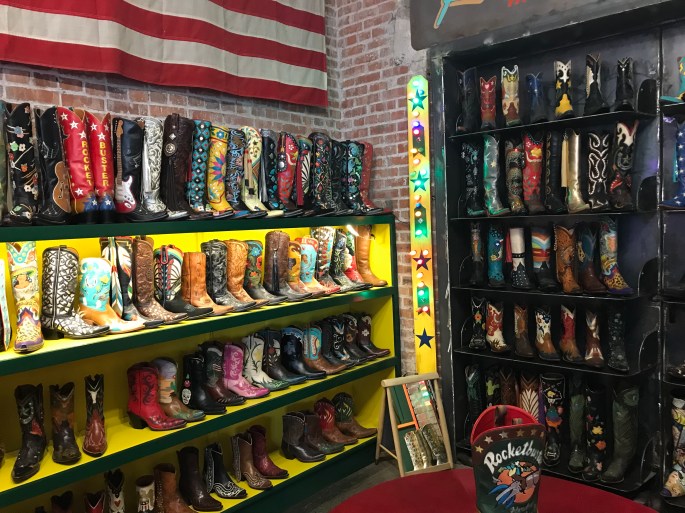
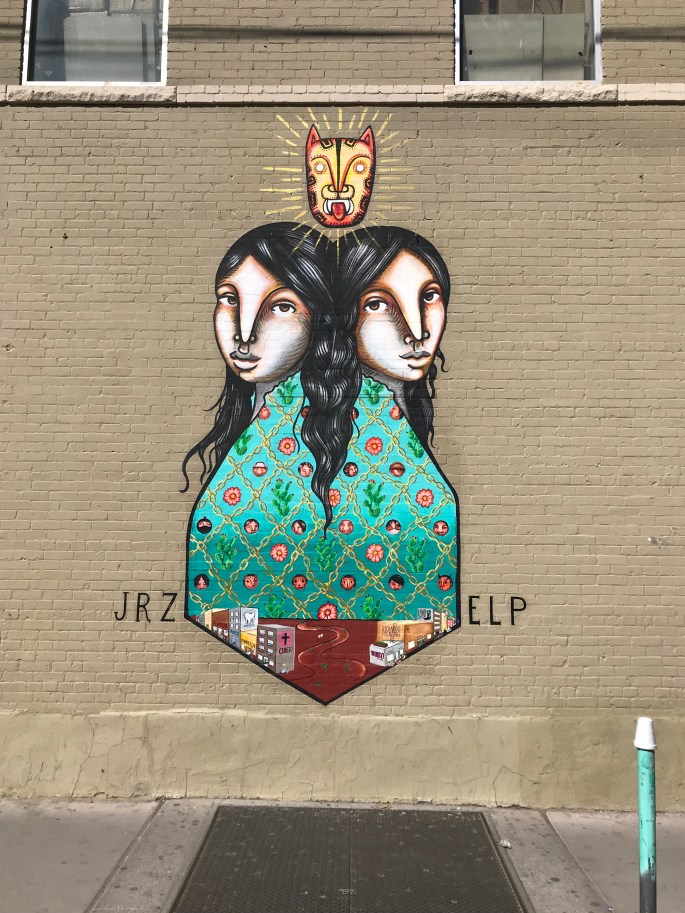
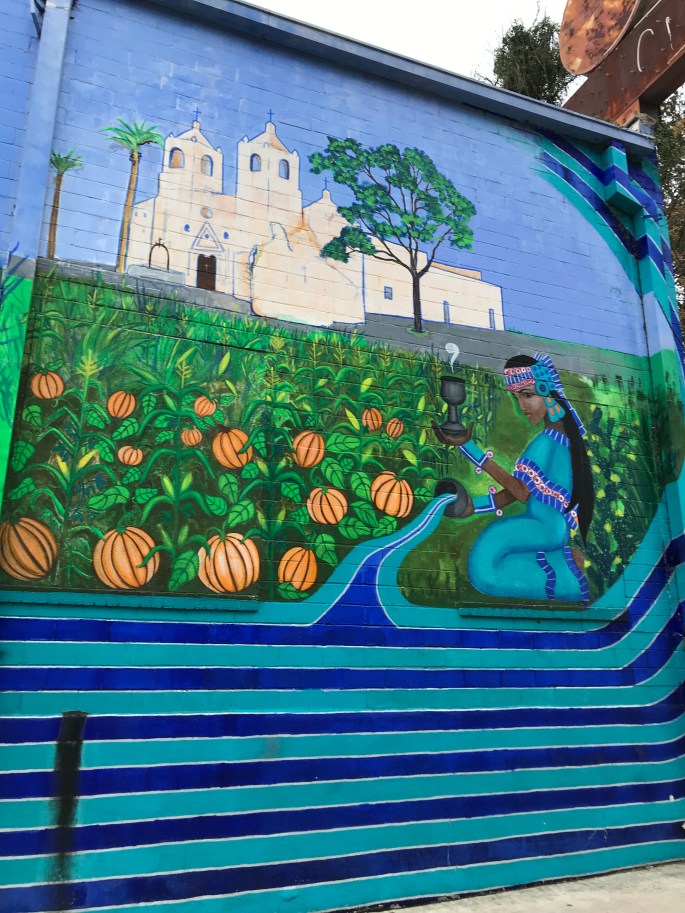
The next day we tried to get into the Art Museum of El Paso but it was closed for maintenance. Instead, we got our art fix checking out the dazzling murals adorning the streets and a made-to-order boot shop, Rocketbuster, filled with shelves of arresting tapestries adorning leather. This is where you’ll find photos of Mitt Romney and his wife, along with other people of note, tacked to the wall showing off their purchased hand-crafted pieces of art. The owner was a firecracker herself and filled us in on her business of boots and her knowledge of vintage campers. I asked her about the Trump rally the night before and she agreed that it was NOT indicative of how people in El Paso feel about the wall, and she reconfirmed my suspicions about who was paying who to be there.

Big Bend

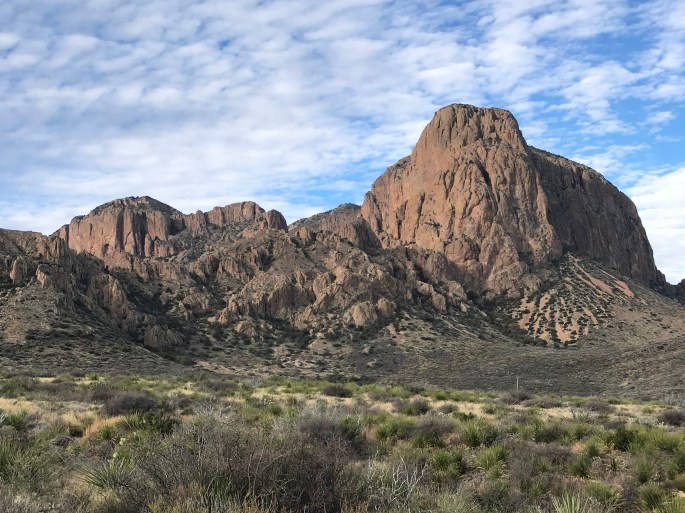
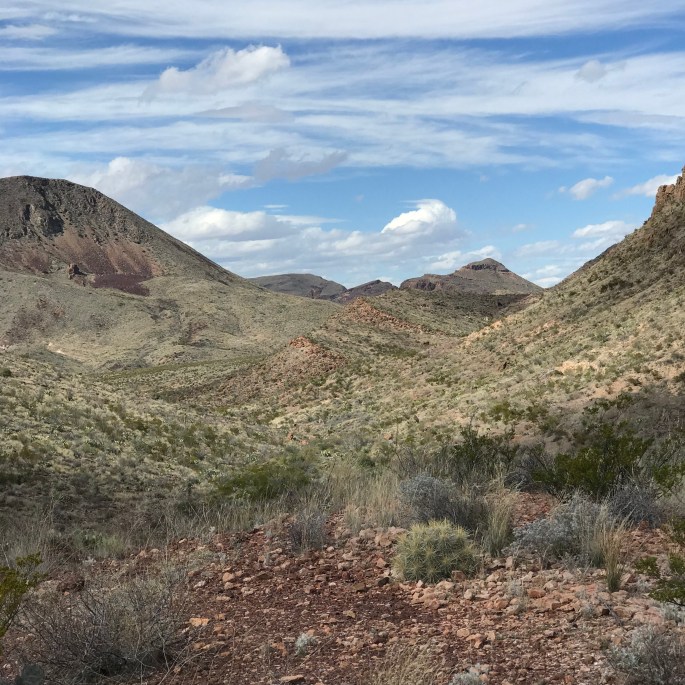
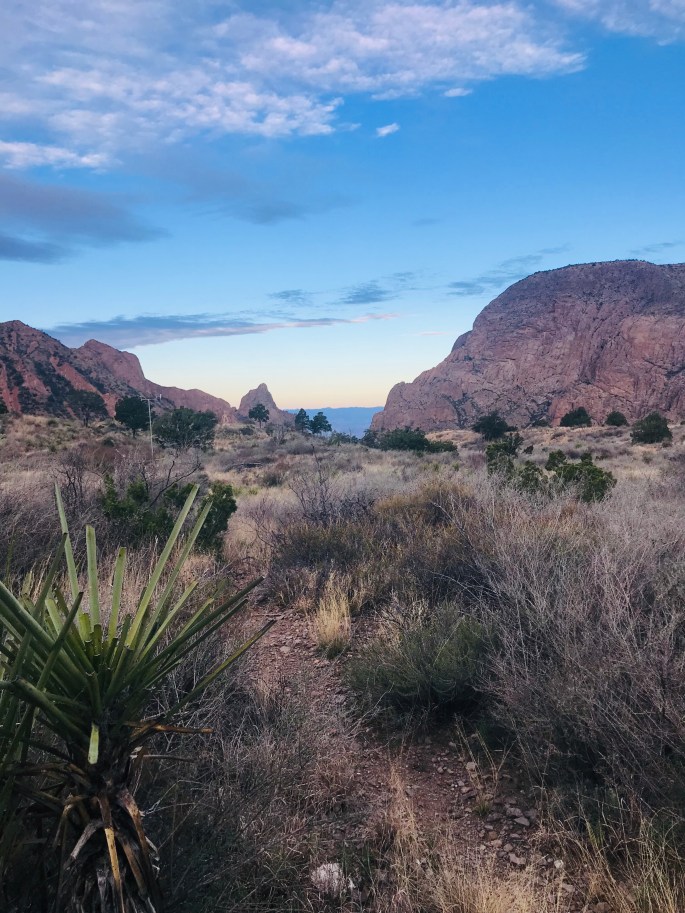
We have just spent a few days in Big Bend where you enter a world of majestic stone pillars, columns, domes, buttes, hoodoos, and walls of multi-colored hues of the earth. It’s almost as if you are on a different planet, yet in reality it’s a wonderfully kept landscape of nature undisturbed by mankind. Here lies the Chihuahan Desert with shrub brush, cactus, and flowers; and the Chisos mountains lush with piñon pine, drooping juniper, and firs.

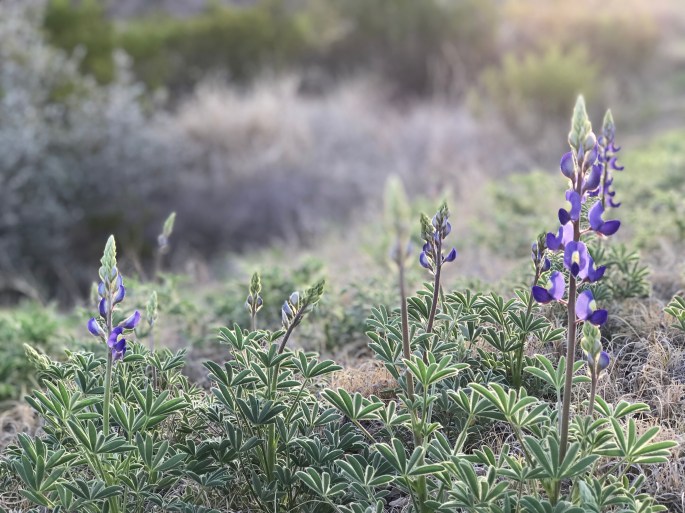
We hiked in both areas and relished the views and changing viewpoints while on each trail. On the desert trail we hiked out to the Mule Ears rock formation. Just prior to the Ears we dipped down into a spring lush with maiden hair fern cascading down the rocks into the pool. In the pool were tadpole eggs and one solitary tadpole swimming about. The rocks I discovered along the way appeared to be mini paintings of what I was seeing in front of me – bands of colors showing all the chemical reactions over the years. There were flowers springing forth trumpeting their blossoms of yellow sunflowers, blue bonnets, and magenta cups. Even some of the cactus were in bloom.

In late afternoon we were in the Chisos mountains and had spectacular views of the Chisos basin while surrounded by greenery – quite a contrast from our desert hike, and different lighting from our morning view in the same place. Earlier, we got up in the dark and drove to higher ground with our chairs and a thermos of coffee to watch the sun come up and cast its ever-changing light on the mountains. After, we headed out to a hot spring to bathe in a 105 degree pool among the towering yellow reeds of the Rio Grande. What a treat!

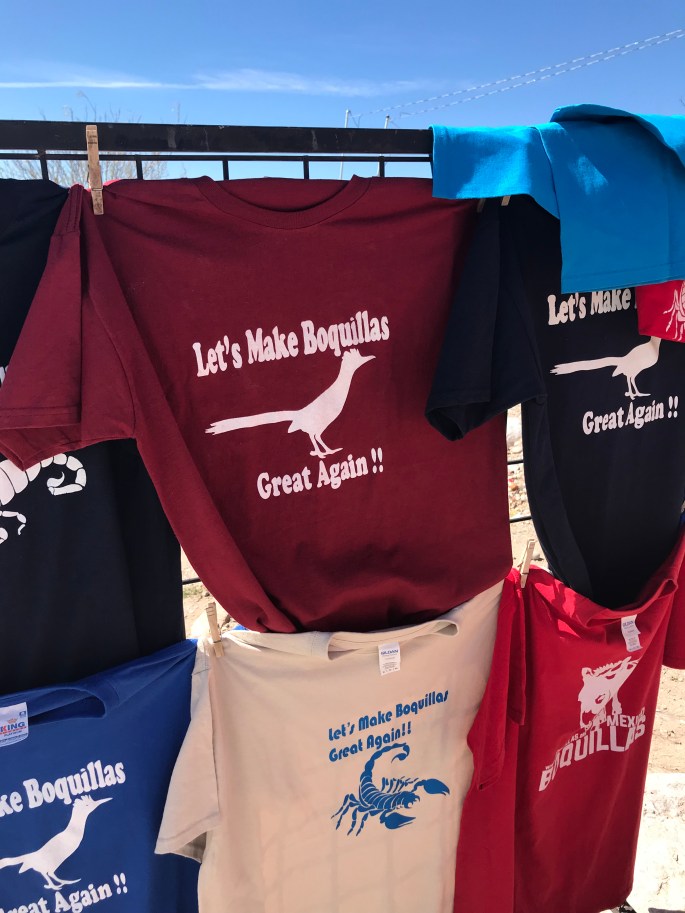
Our next stop was Boquillas, Mexico. At the river’s edge there was a Mexican boatman ready to row us, to the tune of five dollars, the short 100 feet across the river to Mexico. On the other side men asked if you wanted to pay to have a donkey take you into town. We chose to walk the mile dirt road to the border town where we had some tacos and a margarita – of course! The town is dotted with small homes where women sit embroidering in front of clothes lines displaying their crafts for sale. They made bags, beaded insects, and bottle and can coolers depicting the scenery, plants and animals of the area. Children ran up to us and I bought their handmade “No Wall” woven bracelets. The town truly subsists on the curiosity of foreign visitors. From 2002 to 2013 when the border was closed the people in Boquillas had to move elsewhere to make a living – thus, all the NO WALL and MAKE BOQUILLAS GREAT AGAIN paraphernalia for sale. As I said to Mike on our walk back to the river, it’s like ages ago when the women stayed at home to prepare meals and created goods to trade and the men went off hunting – yet today, the goods are souvenirs and the game are American tourists.

Devil’s River

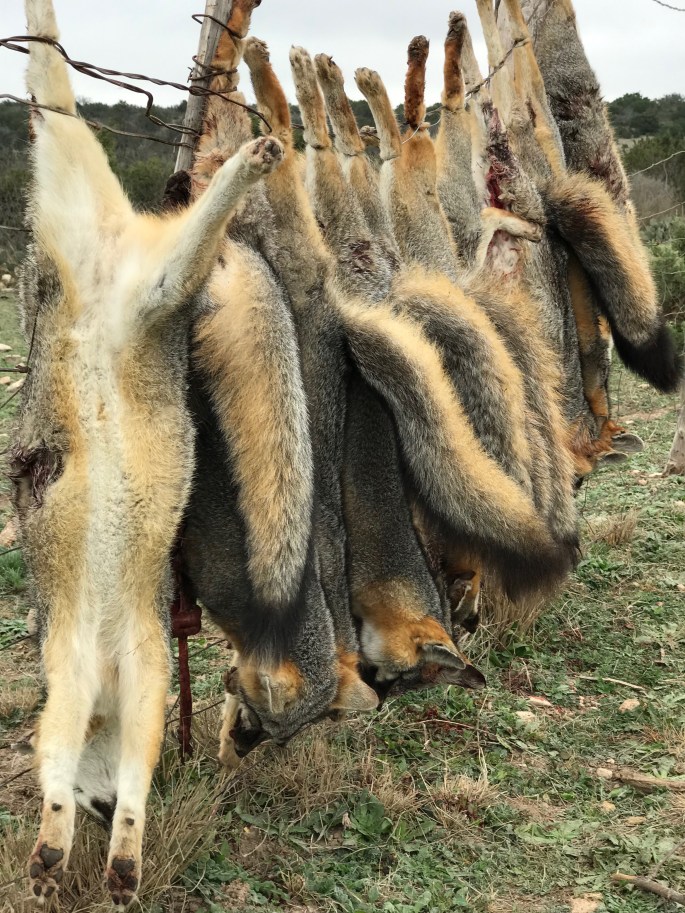
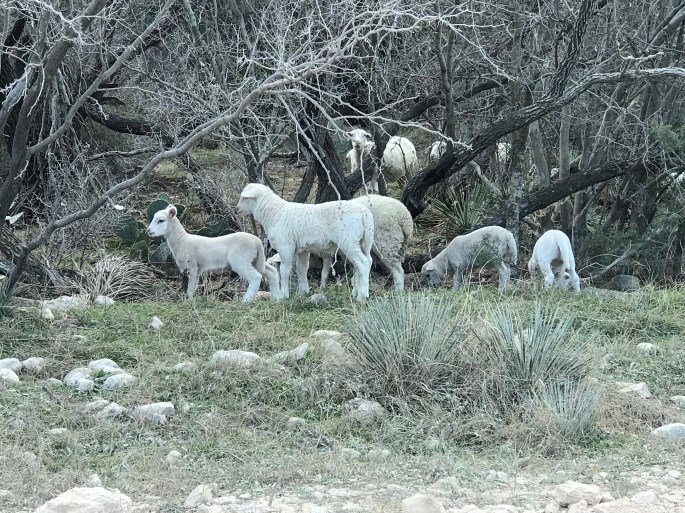
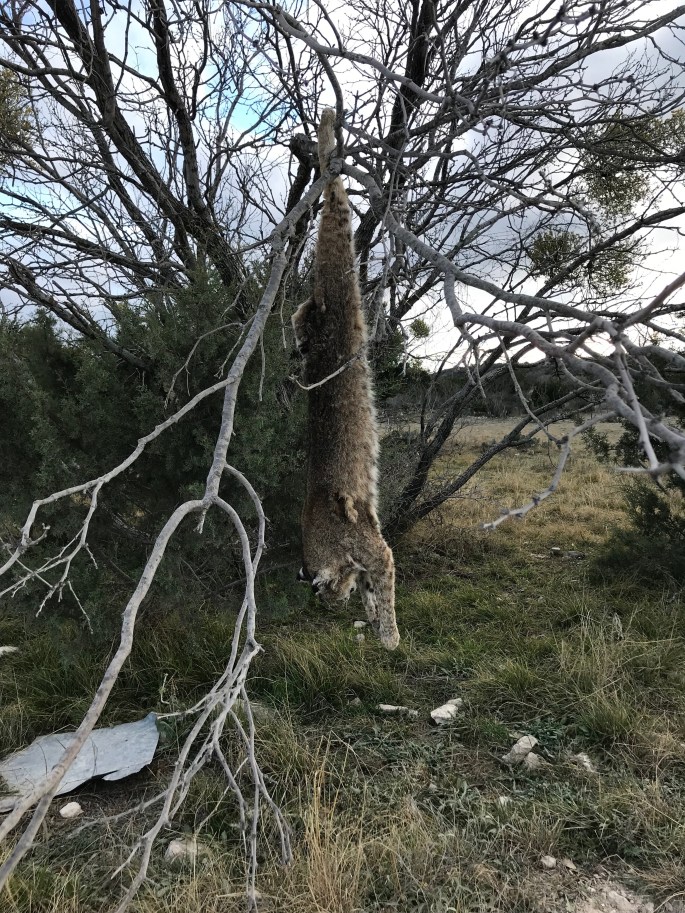
Solitude. That is the gift we have been luxuriating in over the last few days. The Devil’s River State Park is in the middle of nowhere – just wide open space. We were all alone on the 22 mile gravel road into the park aside from the sheep and cattle at the ranches, and the deer, birds, and other animals camouflaged from us. One of the ranchers had dead animals hanging on either side of his property – a string of a dozen fox on one side, a bobcat on the other. They were certainly freshly killed, but his message and his audience… who knows. But, his adorable little lambs were certainly worth saving. It took us an hour to get down that road with all of its dips and hills but we didn’t tire of the scenery. Even in the winter, the land offered drifts of prickly pear cactus, bands of yellow grasses, and hillsides of shrub and rock.

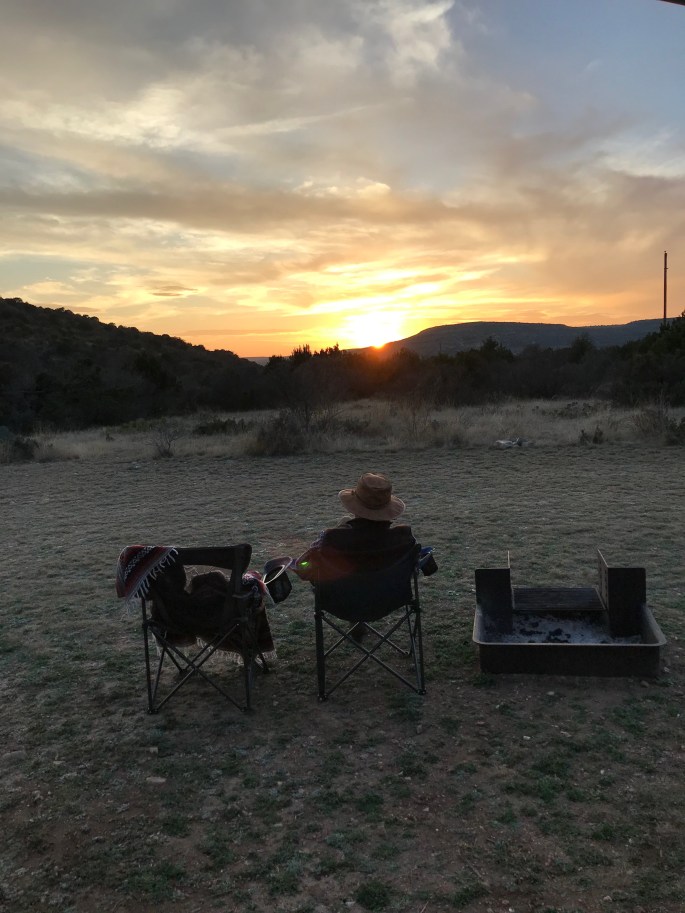
There are 20,000 acres in the park and only seven sites to camp, each one in its own setting. We were higher up looking ahead to a small hill, out to the sunrises and sunsets on either side, and a dry river bed below. It was several miles to the floor of the river only accessible by foot. We spent time on the river, Mike fishing and me birding. We didn’t catch any fish but we did see lots of turtles, a nutria (which looks much like a beaver minus the big, flat tail) napping on its own island of dry grass, two enormous black vultures, a white egret, and a variety of smaller birds. We listened to the springs spilling crystal clear water into the green-colored river.

The night sky offered us even more solitude. The Milky Way, clearly defined, dense with its cloudy foam spreading from horizon to horizon, and the sparkling diamonds of stars showing off the magnificence of the black sky. Without any light pollution it’s amazing how it all seems so soft and deep – like a blanket enveloping us from above. I just finished reading a book, Silence: In The Age of Noise, by Ering Kagge, in which he contemplates how “eyes cannot gaze at themselves, though you can study them via the stars”. He believes the stars (and I’m paraphrasing here) are part of the world of science which can be quantified and therefore finite, yet the inner workings of your mind are endless. It made for good pondering while stargazing.

The Lone Star State

The last few days have been quite different from our time in the canyon as we traveled through two cities – Austin and San Antonio. In Austin, our campsite was pretty close to town yet we watched a bobcat pass through the camp. In San Antonio, we are now staying about 45 minutes outside the city at the Guadalupe River State Park Campground with trails along the river and birds everywhere. We are trying to learn the songs of the different species here.

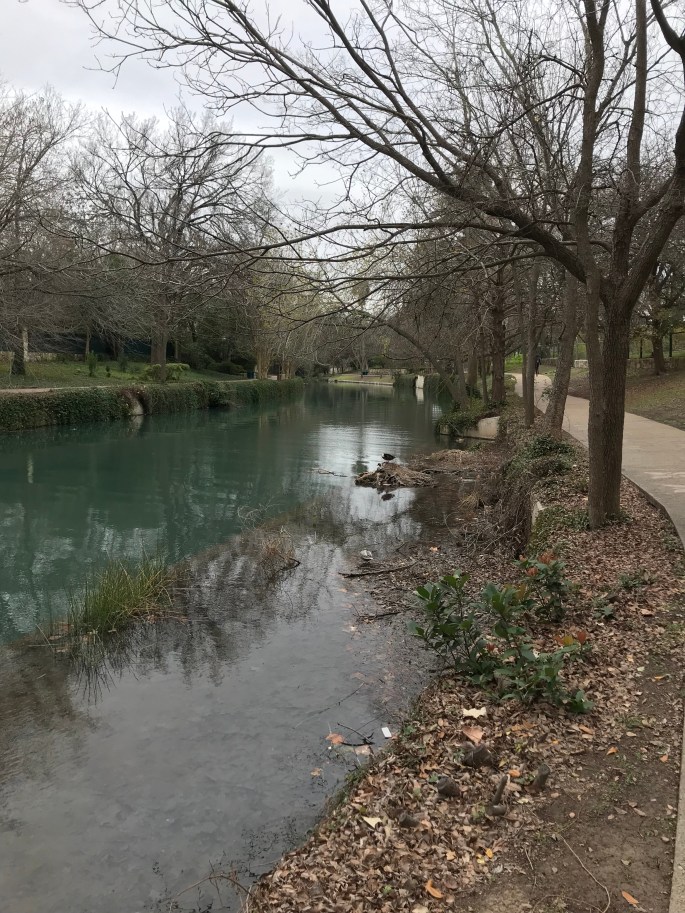
Austin is an interesting city, but we find the quaintness of San Antonio more to our liking. As one local told us, “Keep Austin weird and San Antonio lame” is a cherished saying here. The River Walk is charming with overhanging trees, stone walkways, and enchanting homes of all sizes. We had lunch in the Blue Star district, once home to a large flour mill, that still exists today, and to warehouses used by companies to ship and store their goods alongside the railroad. Now, the warehouses have been converted into living spaces, artists’ studios, and restaurants. We strolled the River Walk to downtown San Antonio which caters to tourists with little shops and restaurants decked out with outdoor tables, umbrellas, and heaters.

Ok, I’m not a history writer so bear with me here, but the history of Texas is quite fascinating so I will share. As always, history tells stories of wanting immigrants – as Texas did to help secure the state against Mexico, but then later wanted to close its doors. Ah yes, cycles – that’s history for ya.

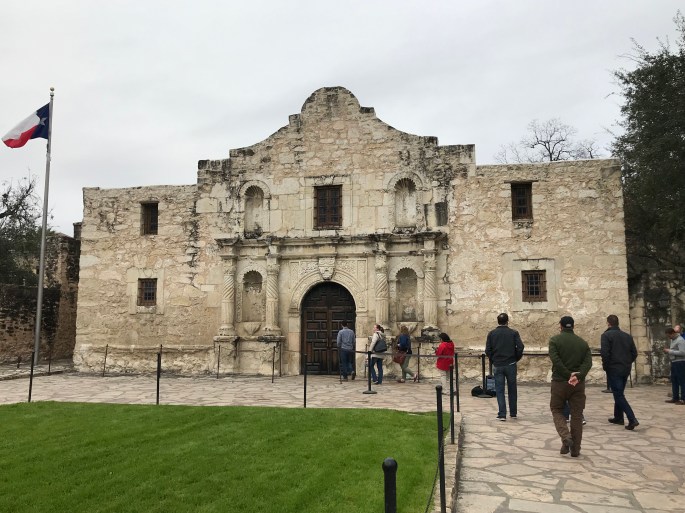
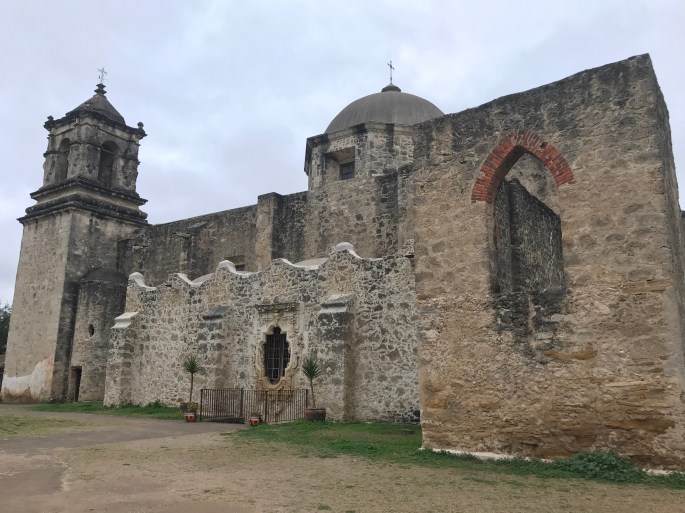
Visiting the Alamo, in juxtaposition to the modern buildings surrounding it, is a step back in time. The Alamo was once called Mission San Antonio de Valero when it was built around 1718. The purpose of the missions was to convert the indigenous people to Catholicism and to teach them the Spanish way of life. Native Americans were taught farming, stonework, raising livestock, and the like so they would be loyal to Spain and not to other foreign powers. Missionaries and Native Americans lived and worked together and were protected from other indigenous people. Over the years, Native American convert populations dwindled, mission lands were given to the Spanish locals, and eventually the Alamo evolved into a military outpost for Spain, and later Mexico, Texas, and the United States.

Walking into the Alamo, this relatively small building, and reading about its history allows one to witness the changes of its use and feel the resilience of the men who fought to uphold Texas during the legendary battle of the Texas Revolution in 1836. At that time, the Mexican soldiers, led by General Santa Anna, sieged the fort after 13 days in which the Texans, including Davy Crockett, tried to hold them back. Included in the list of dead was one William Lewis of Virginia – Mike’s father’s namesake and birthplace. We will have to do some exploring of possible connections.

For Texans, defeat at the Alamo only incited them to continue to fight for their independence. With their rallying cry, “Remember the Alamo” Sam Houston and about 800 Texans soon defeated Santa Anna’s Mexican forces at San Jacinto – near the site of present day Houston. Houston pressured Santa Anna, now a prisoner, to declare defeat and his troops were forced to withdraw from San Antonio. Now declaring itself an independent republic, Texas was jubilant but would still need to fight off Mexico over the next ten years.

Jumping ahead, eventually the United States annexed Texas in 1845 and used the Alamo to store supplies and quarter troops. The US stationed more troops along the Texas border in expectation of a military response from Mexico – which came to be – the Mexican War of 1846. Over the next fifty years, the Alamo went through many changes in ownership, usage, and reconstruction. Today, it stands, along with other San Antonio missions, on the UNESCO World Heritage List.

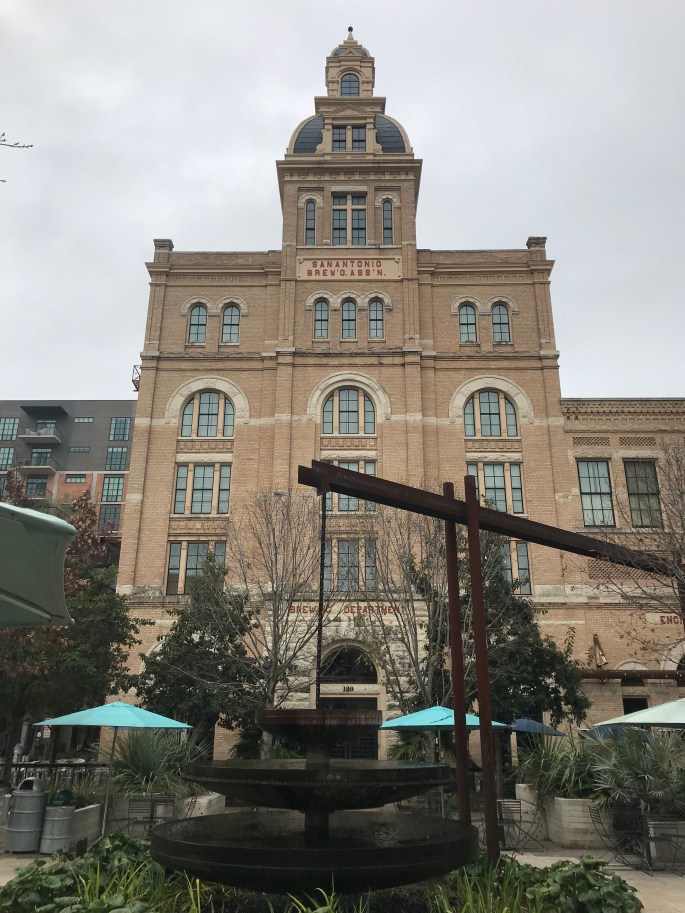
The missions are a must-see, but if you can, have a drink in the lobby of the Hotel Emma. Hotel Emma is located in the newly renovated, upscale Pearl District which houses a Culinary School and more. The hotel was once a brewery and there are even rooms in the original brewhouse tower. The lobby is decorated with a mix of industrial-history, old Texas luxury, and fresh flowers spilling out of vases in every cozy nook. I have no idea what a room goes for, but there is a rooftop pool, a library, and a restaurant so next time that’s where I’m staying!

Mike and I are a bit tired of the city so we are now on our way to Devil’s River State Park. The park is some 20 miles off of a gravel road and totally off the grid. The ranger I spoke with kept asking me if we had ever been here before. He explained it was in the middle of nowhere and that sounds good to us. We will fill Elvis’s tank with water, fuel up, and pick up provisions. We will be, as they say in trailer language – dry camping. We are looking forward to some tranquility.

Palo Duro

After packing the camper and tidying up the house we began our journey in Elvis. We said goodbye to Denver and embarked on the road south and east. We traveled in the dark, across the plains, and spent the night outside of Lamar, Colorado. We were the only ones at the snow-covered grounds of the campground, but woke to 24 degrees, the sound of big-engine trucks starting up, and our first beautiful sunrise through the trees.

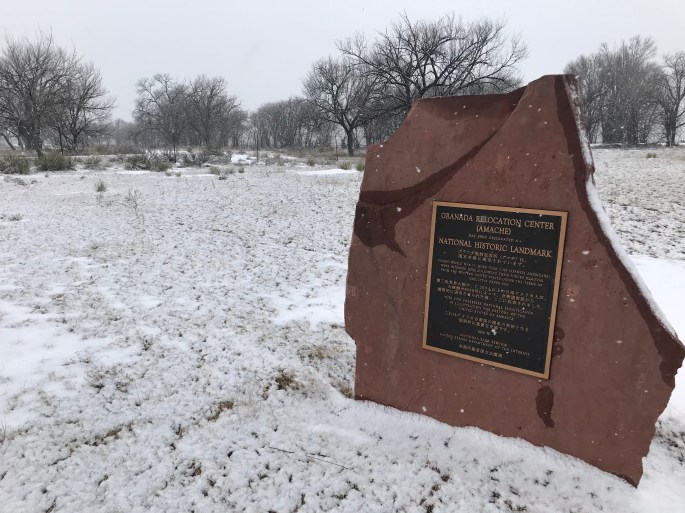
We packed up and headed toward Oklahoma amidst a light snow and winter winds. Arriving at the site of the Amache Japanese Internment Camp gave us a considerably-removed sense of the innocent victims braving the bitter cold and blistering winds on these open grounds. The grounds were desolate but for a few watch towers and some barbed wire fencing. The informational sign posts depicted the true testament of courage, strength, and the strong will of the people. They lived as optimistically as they could amid dire circumstances. The heat was brutal in the summer, and winters looked to be abysmal. Photos depicted gardens lush with flowers and necessary crops, and children sitting on stiff wooden benches in make-shift schools. With more than 7,300 residents, this was the tenth largest camp in Colorado. The inhabitants waited in long lines for the latrines and mess halls, and at night slept on canvas cots within a 20’ x 24’ portion of a barracks building, poorly insulated and heated by coal burning stoves. None of the inhabitants were ever convicted of espionage, their fate determined by a paranoid people and a fear-based idea.

img_0078-2

                                               ~    ~    ~    ~    ~    ~    ~    ~    ~    ~    ~   


Thursday night we arrived at Palo Duro Canyon, the second largest canyon in the country. We were giddy with excitement at our first new-found home. We set up Elvis amongst cedar and mesquite with the red and green hues of the canyon’s walls wrapping its stone arms around us. We watched the canyon walls, alit with yellow from the setting sun, as we clinked our glasses of Scotch (thanks Josh!) and reflected on our good fortune.

It’s hard to believe it is January and we are camping. The benefit to this time of year is that we don’t have to plan ahead – vacancy abounds! We are just one of four in the Sagebrush campsite and the silence is deafening. Plus, there are hardly any people on the trails.

Each day we have hiked within the canyon, the first along the Rock Garden trail and up to and along the rim offering us a bird’s eye view of this portion of the canyon. The canyon stretches 120 miles and is called Palo Duro, translated in Spanish “hard wood”, named after the plentiful cedar bush the Native Americans used to construct their bows and arrows. In the park, the canyon area is several miles wide and 800 feet in depth. The hike to the symbolic hoodoo, the Lighthouse, took us deeper into the canyon along a red-sandy trail. I think it appropriately named as it looks over the canyon protecting its splendor. After, we walked along the Red River at the base of the canyon. I could picture my friend Roxy, in the heat of the summer, sitting in the red-clay of the river with her family, treating themselves to their very own spa treatment by plastering their skin with the silt. We were hiking in near 50 degrees but the sun was so warm and the skies so blue. We took in the stacked layers of the canyon walls, depicting the occurrences of deposits, erosion, and chemical reactions, that have left the colored stripes of the walls over the last million to 250 million years. We observed the prints and scat of local animals – and the occasional tufted missing tail, listened for birds, and got lost in our own thoughts.

At the visitor center we watched a documentary about the history of the canyon and its people. As history points out, settlers and Native Americans were at odds with each other fighting over who owned this great land. In the film, the fascinating story of Cynthia Parker was told – a young girl abducted by one of the tribes and later wedded to the chief, together raising three children. She could fend for herself and learned to live off the land. When later captured, by the Army, with her young daughter and reunited with her family, she longed to be back with her tribe. Her daughter died at a young age, and soon after Cynthia did too, many think of a broken heart.

One of the tit-for-tats the Army and the Native Americans got into was stealing each others’ horses. After several back and forths of this game, the Army got weary of the horse play and rounded up 1,400 horses only to corral them to the bottom of the canyon where they were shot and left to rot. It is said that one can still hear the neighing and whining bounding off the walls in the depths of the canyon.

Launching

It’s happening – we’re going on a road trip towing Elvis our camper! Mike and I have been dreaming about touring the US for many years and all of a sudden it is becoming a reality. We will be visiting small towns, cities, and of course all the great outdoors we possibly can. From Denver, we will head south to Palo Duro Canyon in Texas – who knew there was a canyon in Texas – and on to Austin and San Antonio. From there it will be Big Bend, and of course a stop in Marfa to visit Ian. El Paso, Texas next to gain an understanding of life at the border, and soon after on to the Tucson, Arizona area with parks nearby for plenty of hiking, biking, and exploring. Then, it’s on to San Diego where we will reassess and make more plans. Death Valley and Joshua Tree are on our list, if the Government Shut Down ever ends, and then, who knows.

We knew this time was approaching where Mike might be needing to switch jobs. With the appointment of a new governor in Colorado, Mike had to say goodbye to his dynamite boss Governor John Hickenlooper and start thinking about a new career in transportation. My consultant work with a Children’s Bookstore in Denver was wrapping up, so the timing couldn’t be more perfect. Big decisions are coming our way and what better way to ponder our options and think about the future than under the dark skies asking the North Star to guide us.

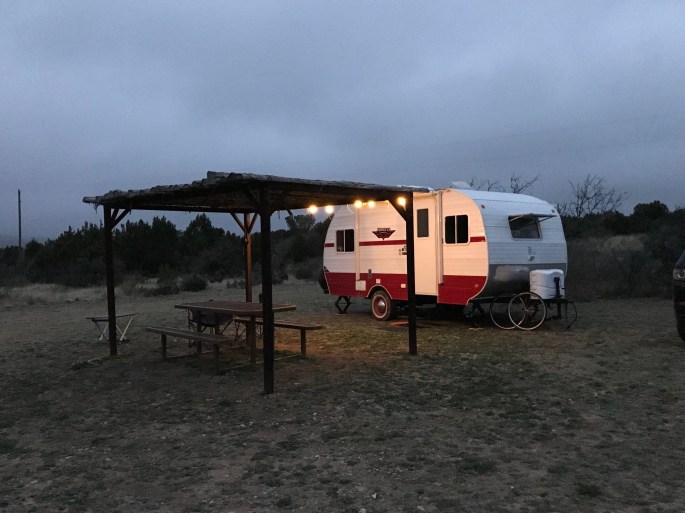
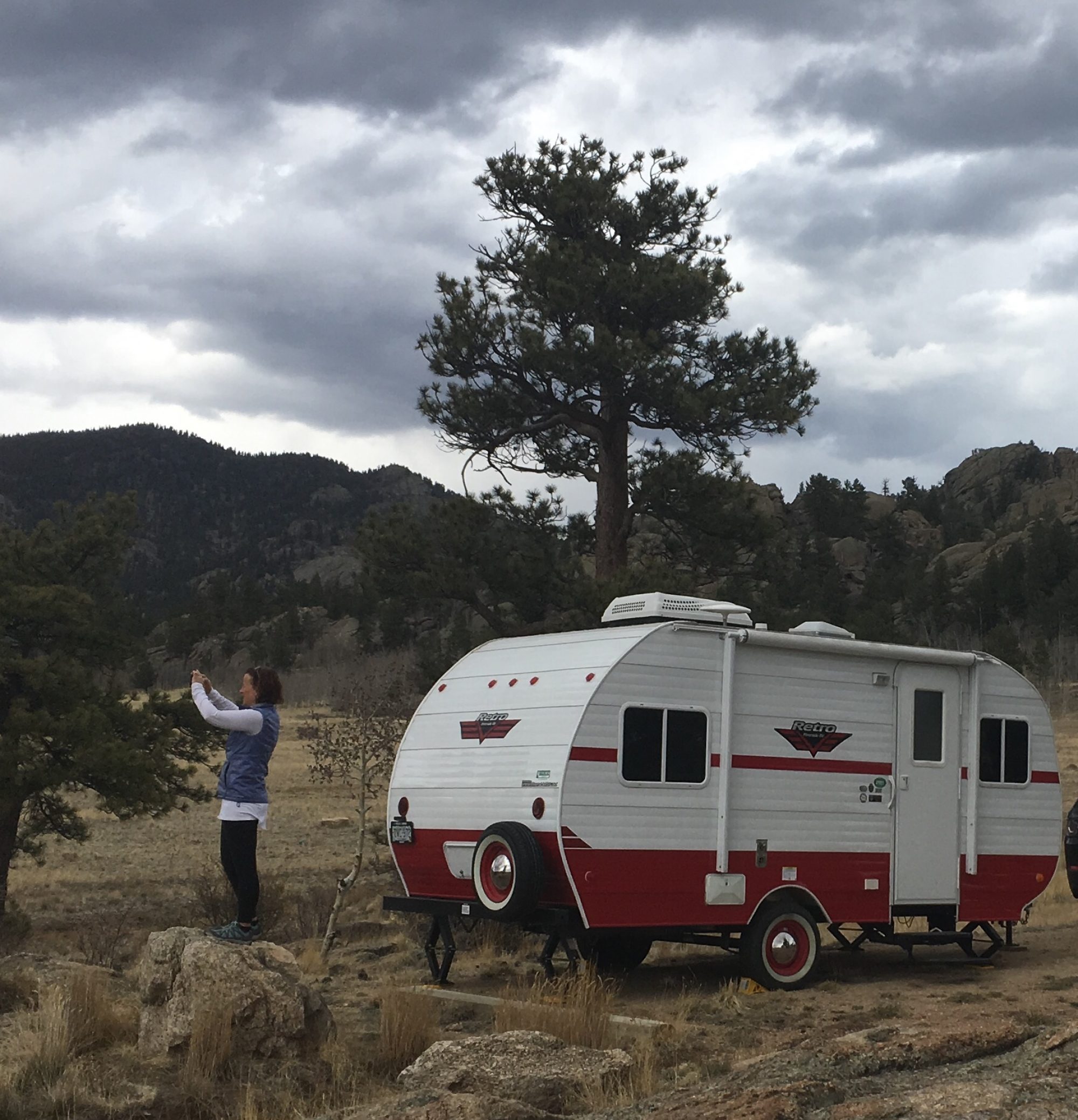
We bought our camper last year, during a hail damage sale, with the intent of testing it out in Colorado in preparation for an extended trip some time in the future. Aside from a “can-opener” experience with the siding in its first few weeks we have worked through the kinks and hurdles of getting to know how these mini homes on wheels operate. We chose a retro Riverside trailer because of its charm and relatively small size in the world of pull behinds. It’s named Elvis because of its retro look with red vinyl diner-looking seats, black and white tiled flooring, and light birch wood paneling throughout. But, probably our favorite feature is our bed-slash-couch nestled like a ship’s cabin bunk in the back. Of course, we plan to spend most of our time outside but it’s nice to know there is a place for us at the end of each day to come home to and relax in, and if need be, get out of the weather and recharge.

It’s nature we want to wrap ourselves up in. A quilt of velvety greens and reds, whispering winds, chattering wildlife, and shimmering stars. Hiking is in our blood. Growing up in New Hampshire I got the bug for hiking, inspired by my parent’s good friends Tom and Liz Williams, who built their own cabin at the base of Cardigan Mountain. Since my parents weren’t hikers I would meet Liz and hike with her through the fir woods to the bald-topped granite summit with views of the Whites and beyond. My high school and college dates involved hikes, and my sister and I would tent in Acadia each summer. My mother had an aversion to the outdoors – too many uncomfortable aspects like mosquitoes, sunburns, sweat, grit, and such. My father loved it. From fishing, to hunting and camping – but he wasn’t a hiker. He took me out walking in the woods to track down grouse and partridge, had me out in a boat on the Great Bay or a canoe on the Restigouche River forever in search of the salmon, trout, or flounder to bring home for dinner. He bought me a bike and cross country skis even though he was a down-hiller. He was passing on his love of the outdoors and I was biting.

When Mike and I married we spent every summer hiking and camping in Acadia National Park. We loved that the mountains met the sea and we could hike in the morning and beachcomb along the rugged coastline in the late afternoon as the Maine skyline turned pink and orange. We kayaked and once sailed, too. in our later years we kayaked and camped on the private islands off of Deer Isle. We got our kids camping as soon as they could walk and brought them to Acadia every summer. Later, we took them out west, with our checked baggage being our family tent, and wound our way through the National Parks, first in Arizona and Utah, and another time to California to visit Yosemite, Big Sur, Sequoia, and King’s Canyon. We wanted hiking and camping to be in their bones and today I’m thrilled that they all possess a tent and hiking boots.

My first cross country trip was after my junior year in high school. There were about a dozen of us, in two vans with two leaders, and we hiked and camped our way through the American West. We learned to rock climb in the Tetons, spelunk in the Dakotas, cook over an open fire, backpack, set up camp, and live outside for eight straight weeks. I fell in love with the vast open skies of the West, the red-walled canyons, and the dry crisp air. Sleeping out in the open with the incandescence of the night sky, and without mosquitoes humming in your ears and nibbling at your neck, was a freedom I had never experienced. Back in New Hampshire I continued to hike in the White Mountains and while in college in Vermont the Greens. My favorite place was atop of a mountain – something that is still true today.

So, getting back to Elvis. There is a lot of planning involved in leaving your home for a good long time. Aside from stopping the mail, cleaning out the fridge, and imploring your neighbors to check on things, we do have a pet rabbit to tend to. And, this is no ordinary rabbit that lives in a cage and needs some food and water. Our rabbit, Roux, has full run of the house and uses a litter box. But, the main thing he needs is some attention. He jumps on our bed if we sleep in, anxious to get his daily morning dose of blueberries, banana, and kale. He lies at our feet all day, jumps up to join us on the couch at night, and looks forward to lots of petting and the occasional treats. But our faithful rabbit-whisperer Maggie is coming to our rescue once again. It feels good to know that Maggie will look out for Roux and love him as much as we do.

The other thing I am struggling with are my choices of reading materials. Begrudgingly, I have to return some unfinished books to the library, and I have a stack piled high on my desk of books I’m deciding between. We have a large shelf for books in Elvis, but weight becomes the issue here. I want to bring Jill Lepore’s book THESE TRUTHS: A History of the United States and it alone weighs 2.8 pounds (yah, I weighed it). I know, I could use a device, but I treasure holding a book in my hands. I’ll figure it out and probably bring them all. Continue reading “Launching”